Best Sourdough Bread Tools (2026): Everything You Need to Bake a Great Loaf
From your first banneton basket to the Dutch oven that makes a perfect ear — here are the tools that serious sourdough bakers rely on, and our honest top picks for each.
🍞 Quick Reference: Our Top Picks by Category
| Best Banneton | Breadtopia 9" Round Rattan Banneton — Amazon → |
| Best Bread Lame | Wire Monkey Lame (UFO style) — Amazon → |
| Best Bench Scraper | OXO Good Grips Stainless Bench Scraper — 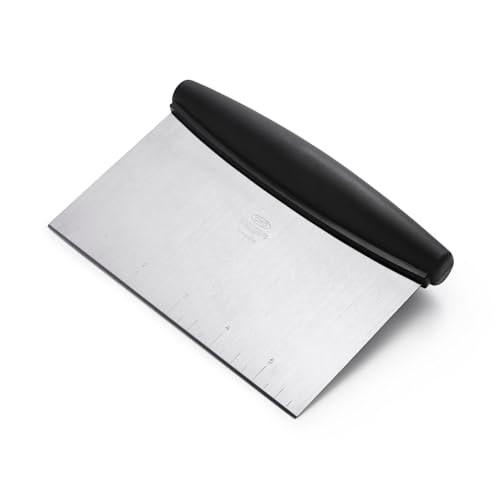 Amazon → |
| Best Danish Dough Whisk | BOSKA Dough Whisk — Amazon → |
| Best Kitchen Scale | OXO Good Grips 11 lb Scale — 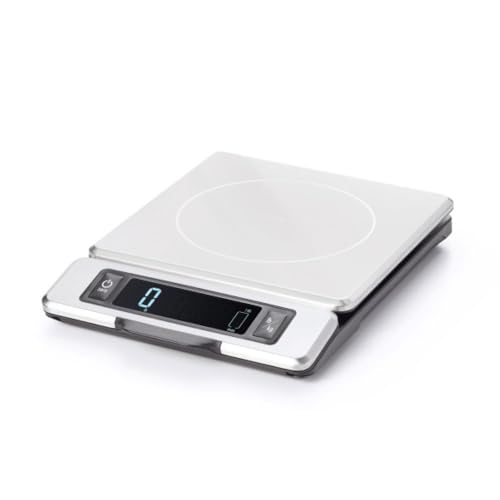 Amazon → |
| Best Dutch Oven | Lodge 5-Qt Cast Iron Dutch Oven — 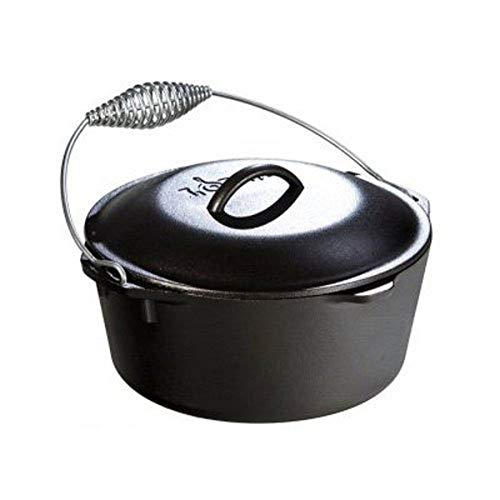 Amazon → |
| Best Dedicated Baking Vessel | Challenger Bread Pan — ChalllengerBreadware.com → |
| Best Bread Bag | Khăn Linen Bread Bags — Amazon → |
What We Cover
Why the Right Tools Actually Matter
Sourdough bread has exactly one ingredient requirement: time. The actual shopping list — flour, water, salt, and a wild yeast starter — is about as minimalist as cooking gets. But the tools you use determine whether that time pays off.
A kitchen scale separates consistent baking from guesswork. A banneton basket gives your loaf the structure to achieve that beautiful ear. A good Dutch oven traps the steam that creates the glossy, crackled crust. And a sharp lame lets you score with intention rather than hack at the dough and hope for the best.
Looking for rectangular sandwich or Pullman pans instead of Dutch ovens and Challenger vessels? See our Best Loaf Pans for Sandwich Bread (2026) guide.
We've been baking sourdough seriously for years. This guide covers every tool you genuinely need, from the absolute essentials to the upgrades that make the process more enjoyable. We've tested everything on our list — no padding with products we haven't used ourselves.
For mixing your dough, you'll also want to read our Ankarsrum mixer review — it's the best stand mixer for sourdough and high-hydration doughs. And if you're interested in milling your own flour, check our best grain mills guide.
1. Digital Kitchen Scale — The Most Important Tool
Before any other tool, buy a kitchen scale. It's not optional. Every sourdough recipe worth following uses grams, not cups. Baker's percentages — the standard language of bread recipes — only work with weight measurements. A cup of flour can weigh anywhere from 120g to 165g depending on how it's packed; that 30% variance will wreck your hydration calculations.
Here's what to look for in a baking scale:
- Capacity: At least 5 kg (11 lbs). You'll often weigh your whole mixing bowl of ingredients.
- Resolution: 1g increments for flour and water; 0.1g is useful for measuring starter and salt
- Tare function: Allows you to zero out the scale with a bowl on it — essential
- Platform size: Large enough to hold a big mixing bowl
- Backlit display: So you can read it under a bowl
OXO Good Grips 11 lb Stainless Steel Food Scale
~$50
The OXO scale is the standard recommendation for sourdough bakers, and for good reason. Its pull-out display slides away from the platform, meaning you can read the numbers even with a large mixing bowl on top — a thoughtful design detail that makes a genuine difference. The platform is large enough for most bowls, the 1g resolution is precise enough for bread baking, and the 11-lb capacity handles even large batches.
Runs on AAA batteries (no USB), tares instantly, and is easy to clean. We've used ours for three years without any issues. At ~$50, it's the best combination of practicality and price we've tested.
✅ Pros
- Pull-out display is genius for large bowls
- Large platform, 11-lb capacity
- Easy tare, simple interface
- Durable, easy to clean
❌ Cons
- Only 1g resolution (not 0.1g)
- Battery-powered (no rechargeable option)
Escali Primo Digital Scale
~$30
The Escali Primo is a perennial value pick. It offers 1g precision up to 11 lbs, a clean interface, and a compact footprint. The display isn't pull-out, so very large bowls can obscure the numbers — but at $30, it's an excellent starter scale. Millions of home bakers use it daily without complaint.
Check Price on Amazon →2. Banneton Proofing Baskets
A banneton (or proofing basket / brotform) is a rattan or wood pulp basket that holds shaped bread dough during its final proof. It does two critical things: supports the dough's shape as it rises (preventing it from spreading flat), and wicks away surface moisture to create a slightly dry skin that makes scoring easier and promotes a better crust.
The classic rattan banneton also leaves beautiful spiral rings on the loaf's exterior — the visual signature of an artisan sourdough loaf.
Banneton Sizes and Shapes
| Shape | Common Sizes | Best For |
|---|---|---|
| Round (Boule) | 7", 9", 10" | Round loaves; 500g–1000g dough |
| Oval (Batard) | 9", 10", 12" | Oval loaves; good for sandwich bread shape |
| Long (Baguette) | 18"–21" couche | Baguettes; use a linen couche, not a basket |
For most home bakers making a standard 900g–1000g sourdough loaf, a 9-inch round banneton is the right starting point. Get one round and one oval to cover both loaf shapes.
Breadtopia 9" Round Rattan Banneton with Liner
~$18–$22
Breadtopia makes excellent bannetons at honest prices. The 9-inch round fits a 900g–1000g loaf perfectly. The natural rattan construction wicks moisture without sticking when properly seasoned and floured (a mix of rice flour and all-purpose flour works best). The included cotton liner can be used for doughs that might stick, or removed for the traditional spiral-ring look.
Unlike cheap bannetons that shed fibers and warp, Breadtopia's baskets hold their shape over years of use. Season them well before first use (dust with rice flour, let sit overnight), and they'll release dough cleanly every time.
✅ Pros
- Excellent rattan quality, holds shape well
- Includes removable liner
- Right size for standard home loaves
- Wicks moisture beautifully
❌ Cons
- Must be seasoned before first use
- Cannot be machine washed
3. Bread Lames & Scoring Tools
Scoring — slashing the surface of the loaf just before baking — is not decorative (well, not only decorative). It controls where the bread opens as it expands in the oven. Without a score, the loaf bursts unpredictably along weak points, creating uneven expansion. A proper score creates the "ear" — that dramatic raised flap of crust that's the hallmark of a well-baked sourdough.
A bread lame (pronounced "lahm") is simply a razor blade on a handle, often with a slight curve. The curve allows you to hold the blade at an angle to the dough surface for that classic ear cut. Straight lames are used for batards and decorative scoring patterns.
Wire Monkey UFO Bread Lame
~$25
The Wire Monkey UFO lame is a game-changer for home bakers who do decorative scoring. Unlike straight stick-style lames, the UFO design holds the blade in a secure clip mechanism that makes blade changes safe and simple, and the circular frame sits comfortably in the palm. The blade can be positioned straight or curved, giving you maximum versatility.
Made by a small US-based artisan shop. The quality is evident — this is a tool that feels substantial and well-machined, not a flimsy wire handle with a blade jammed in the end. We've been using ours for two years and it remains our first-reach scoring tool.
✅ Pros
- Safe, easy blade changes
- Ergonomic grip for precise control
- Versatile: straight or curved positioning
- High-quality machined construction
❌ Cons
- $25 is more than stick-style lames
- Takes a moment to learn blade positioning
Breadtopia Straight Bread Lame
~$10
For bakers who want a simple, effective lame without spending $25, the Breadtopia straight lame is a solid choice. It's a wooden handle with a wire end that holds double-edged razor blades. Simple, functional, and produces excellent results. Blades are standard double-edge razor blades, which are cheap and easy to replace. Start here if you're new to scoring.
Check Price on Amazon →4. Bench Scrapers
A bench scraper (also called a dough scraper or bowl scraper) is one of those tools that sounds mundane until you try to bake sourdough without one. It does half a dozen essential jobs: divides dough, lifts sticky dough off the counter, shapes boules and batards, cleans the bench between steps, and transfers scored loaves into the Dutch oven.
You want two types: a metal bench scraper (rigid, for dividing and lifting) and a plastic bowl scraper (flexible, for getting every last bit from your mixing bowl).
OXO Good Grips Stainless Steel Bench Scraper
~$12
OXO's bench scraper hits every mark: a wide, stiff stainless blade with a comfortable non-slip handle. The blade edge is sharp enough to divide dough cleanly and lifts sticky high-hydration doughs from the counter without them tearing. The handle is comfortable to grip and the soft edges won't cut your hand during intensive shaping sessions.
We've tried $5 bench scrapers and $30 bench scrapers. The OXO at $12 outperforms both in day-to-day use. The scale markings on the blade are a minor bonus for rough measuring.
✅ Pros
- Rigid, sharp blade for clean dough division
- Comfortable, non-slip handle
- Great price for the quality
- Easy to clean, dishwasher safe
❌ Cons
- Not flexible (get a separate bowl scraper for bowls)
5. Danish Dough Whisks
The Danish dough whisk (also called a brodpisker) is a wire loop tool that looks like a child's art project but is genuinely one of the most useful tools for initial dough mixing. Its open, coiled wire frame cuts through flour and water without overworking the gluten — you can mix a shaggy dough to full hydration in about 60 seconds with zero lumps, using far less effort than a wooden spoon or your hands.
Use it for: combining flour and water before autolyse, mixing in your starter and salt, and initial dough mixing before stretch-and-fold. It's particularly useful for high-hydration doughs that cling to spoons and hands.
BOSKA Dough Whisk (Large, Stainless)
~$15
BOSKA makes the best Danish dough whisks we've tested. The wire gauge is heavy enough to handle stiff whole-wheat doughs without bending, the handle is long enough to keep your hand clear of the bowl, and the open coil design releases dough cleanly rather than having it wad up in the loops. The stainless steel won't rust or pick up odors.
At $15, it's a low-risk purchase that will change how you feel about the autolyse step. We use ours every single bake.
Check Price on Amazon →6. Dutch Ovens for Sourdough
The Dutch oven (or combo cooker) is the vessel that unlocks great sourdough crust at home. Professional bakers use deck ovens that inject steam during the first phase of baking — steam keeps the crust from setting too quickly, allowing the bread to expand fully before the crust hardens. At home, a Dutch oven replicates this by trapping the steam the loaf releases during baking.
The process: preheat the Dutch oven in the oven for 45–60 minutes at 500°F (260°C). Drop the scored loaf in, cover, and bake covered for 20 minutes. Remove the lid and bake another 20–25 minutes uncovered to develop the dark, crackling crust. The results are stunning.
Lodge 5-Qt Cast Iron Dutch Oven
~$60–$80
The Lodge is the go-to recommendation for budget-conscious sourdough bakers, and it's genuinely excellent. Cast iron holds heat exceptionally well — once preheated, it maintains the high temperature needed for oven spring. The 5-quart size is ideal for a standard 900g–1000g loaf with enough headroom for full expansion.
The downside of the Lodge: loading the loaf is a bit awkward because the pot is deep and the handle gets very hot. Some bakers use a Dutch oven "lid method" — flipping the lid to be the bottom and the pot to be the dome — to make loading easier. Still, for the price, the Lodge delivers results that rival Dutch ovens costing 3× as much. Check out our cookware reviews for more details on cast iron care.
✅ Pros
- Excellent heat retention at very low price
- Pre-seasoned, gets better with use
- Suitable for stovetop and oven use
- Widely available
❌ Cons
- Heavy and awkward for loading loaves
- Lid handle gets hot (use silicone mitts)
- Less elegant for bread than dedicated bread pans
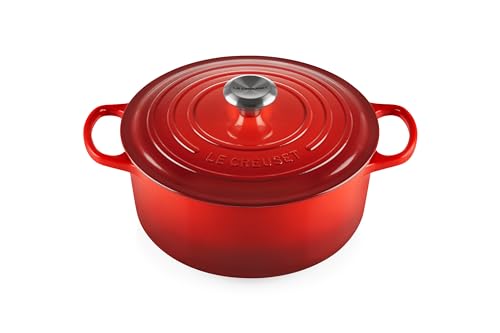
Le Creuset 5.5-Qt Signature Round Dutch Oven
~$380–$420
Le Creuset is the premium Dutch oven choice, and it's excellent. The enameled cast iron is easier to clean than bare cast iron, the handles are ergonomic, and the tight-fitting lid traps steam perfectly. The colorful enamel exterior adds beauty to the kitchen. However, at $400, it's hard to justify over a Lodge for bread baking specifically — the bread quality difference is minimal. Where Le Creuset wins is versatility: it's a better everyday cooking vessel too. If you're investing in a Dutch oven that will live on your stove for soups, braises, and bread, Le Creuset makes sense. For bread-only use, Lodge is the smarter buy.
 Check Price on Amazon →
7. Challenger Bread Pan — The Dedicated Option
Challenger Bread Pan
~$275
The Challenger Bread Pan is the most purpose-designed bread baking vessel you can buy for home use. Designed by bread baker David Barzelay specifically for sourdough, it solves the biggest frustration with Dutch oven bread baking: loading the loaf.
With a traditional Dutch oven, you're lowering a delicate, sticky, scored loaf into a very hot, deep, round pot — it's awkward and nerve-wracking. The Challenger inverts this: the shallow flat base sits in the oven preheating, you load the loaf onto the flat surface at counter height, score it comfortably, then lower the wide dome lid over it. Much safer, much more control, better results.
The Challenger is made from cast iron in a shape optimized for bread baking — the dome is high enough for excellent oven spring, the flat bottom covers more surface area than a round Dutch oven for even heat distribution, and it handles both boules and batards. The steam retention is excellent and the crust development is consistently better than our Lodge results.
At $275, it's a serious investment — more than the Lodge, less than a Le Creuset. For dedicated bread bakers who bake multiple times a week, we think it's worth it. The loading ergonomics alone reduce stress significantly.
✅ Pros
- Flat-base loading is much safer and easier than Dutch oven
- Excellent oven spring and crust development
- Handles boules and batards
- Purpose-designed for bread baking
- Excellent customer support from Challenger
❌ Cons
- $275 is a significant investment
- Heavy (cast iron)
- Less versatile than a Dutch oven for other cooking
- Requires seasoning and proper care
8. Bread Bags & Storage
Sourdough's wild yeast fermentation gives it a naturally longer shelf life than commercial yeast bread — but proper storage still matters. The wrong storage method will either dry out your crust within hours or make it soggy by trapping too much moisture.
The Best Sourdough Storage Methods
- Linen or cotton bread bag: The best option for the first 2–3 days. Natural fibers allow just enough air circulation to keep the crust from going leathery while preventing the crumb from drying out.
- Uncut, cut-side down on a wooden board: The uncut crust acts as a natural seal. Leave the loaf on a wooden board cut-side down and it'll stay fresh for 2–3 days without any bag.
- Plastic bag: Softens the crust (it will become chewy rather than crispy) but keeps the crumb moist longer. Good if you've already cut into it and want to extend life to 4–5 days.
- Freezer: Slice the entire loaf before freezing. Individual slices toast directly from frozen in 3–4 minutes. This is how we store loaf number two when we bake two at a time.
Linen Bread Bags (Set of 3)
~$15–$20
A set of food-grade linen bread bags is the most elegant storage solution for freshly baked sourdough. Linen is naturally antimicrobial, breathes well, and keeps the crust slightly crisp while the crumb stays moist. Machine washable. A set of three means you always have a clean one ready. Look for bags sized for a standard round loaf (at least 14" × 18").
Check Price on Amazon →9. Stand Mixers for Sourdough
You don't need a stand mixer to bake excellent sourdough — stretch-and-fold technique during bulk fermentation can fully develop the gluten in high-hydration doughs without any mechanical mixing. But if you want one, the choice of mixer matters enormously for sourdough specifically.
The Ankarsrum Original is the best stand mixer for sourdough. Its roller-and-scraper system handles high-hydration doughs (70–80%+ hydration) that would cause a planetary mixer to struggle or overheat. It can mix a 1kg sourdough to windowpane test in 12–15 minutes without motor strain.
The KitchenAid Artisan can handle sourdough at moderate hydrations (65–70%), but will struggle with wetter doughs and large batches. The KitchenAid Professional 600 or 750 (bowl-lift, 600W+ motor, spiral hook) handles sourdough significantly better than the Artisan.
If you're serious about sourdough, read our full Ankarsrum review to understand why it's in a different category for this task. And if you're interested in milling your own flour for the most flavorful sourdough possible, our best grain mills guide covers everything from entry-level electric mills to premium stone-burr options.
Frequently Asked Questions
What equipment do I need to start baking sourdough bread?
The bare minimum: a digital kitchen scale (for precise flour and water ratios), a banneton proofing basket, a bench scraper, a bread lame for scoring, and a Dutch oven for baking. With these five tools, you can bake excellent sourdough. Everything else is helpful but optional.
Can I use a regular pot instead of a Dutch oven for sourdough?
Yes. Any heavy, oven-safe pot with a lid will work — a cast iron casserole, a heavy stainless pot with a tight lid, or even a covered roasting pan. The goal is to trap steam in the first 20 minutes of baking. A Dutch oven is simply the most practical and widely available vessel for this purpose.
What is a banneton proofing basket?
A banneton (also called a proofing basket or brotform) is a rattan or wood pulp basket used to hold shaped bread dough during its final rise (proof). The basket supports the dough's shape as it ferments, and the flour-dusted rings leave a beautiful spiral pattern on the crust.
Do I need a bread lame to score sourdough?
You need something sharp to score sourdough before baking — without scoring, the bread bursts unpredictably. A proper bread lame gives you the most control and allows for decorative scoring. A sharp serrated knife works in a pinch, but a lame is the right tool.
Why do sourdough bakers use digital scales instead of measuring cups?
Bread baking requires precision. A cup of flour can weigh anywhere from 120–160g depending on how it's packed — that variance wrecks hydration calculations. Every serious sourdough recipe uses grams and baker's percentages, which only work with weight measurements. A scale is the single most important sourdough investment.
What is the Challenger Bread Pan and why do bakers love it?
The Challenger Bread Pan is a cast iron baking vessel designed specifically for home bread bakers. Its wide, shallow design lets you load the loaf onto the preheated flat base at counter height and lower the dome over it — much safer than lowering a delicate loaf into a deep Dutch oven. Bakers love it for easier loading and consistent oven spring.