Best Rolling Pins for Baking (2026)
Three verified picks: a French tapered pin for pie crust, a straight maple dowel for pizza and big batches, and an adjustable pin for perfectly even cookies.
The rolling pin matters more than most bakers think. A heavy marble pin or a slick nonstick barrel can make pie dough stick and tear, while a plain hardwood pin holds a thin film of flour and lets cold dough glide. The big decision is shape: tapered French pin, straight dowel, or a pin with thickness guides.
We narrowed this list to three US Amazon listings verified by product title and ASIN (October 9, 2026), leaning on published testing such as America’s Test Kitchen, which named two JK Adams pins its winners. Pair your pin with a silicone baking mat for rolling and baking, a kitchen scale for consistent dough, a roomy mixing bowl, and sturdy sheet pans. Sourdough bakers should also see Best Sourdough Tools.
More baking coverage lives in our Baking hub and the site-wide Best Picks roundup.
How We Chose These Rolling Pins
We prioritized solid wood construction that holds flour, a long enough flat surface for a 12-inch pie round or a pizza, comfortable weight, and simple care. We cross-checked independent test results, locked ASINs from live Amazon product titles (never invented), and skipped marble, stainless, and nonstick-coated pins that tend to cause sticking with butter doughs. Prices move, so always check the live listing.
J.K. Adams French Tapered Rolling Pin (20.5 × 1.75 in)
Handleless maple French pin — light, pivots easily, and holds a fine flour dusting so pie and tart dough rarely sticks.

| Spec | Detail |
|---|---|
| Our score | 9.5 / 10 |
| Price | ~$30 |
| Style | Tapered (French), handleless |
| Size | 20.5 in long × 1.75 in diameter |
| Material | Solid North American maple |
| Made | Vermont, USA |
| Care | Hand wash; oil occasionally with food-safe mineral oil |
| ASIN | B000IYYFIQ |
America’s Test Kitchen named the JK Adams French pin its best tapered rolling pin, noting its roughly 9.5-inch usable flat center and slightly textured wood that grips a light dusting of flour.
The taper lets you pivot and steer dough into a circle without lifting, which is exactly what pie and tart dough wants. It is lighter than a dowel, so you rely a little more on your own pressure for stiff doughs.
Pros: Excellent control for round crusts; Raw wood holds flour, so dough releases well; Made in USA, lifetime-style build.
Cons: Light for stiff laminated or bread dough; Hand wash only; must dry fully.
Check Price on AmazonJ.K. Adams PRP-2 Plain Maple Rolling Dowel (19 × 2 in)
Straight 19-inch maple dowel with more heft — the pick for pizza, big batches, and laminated dough.
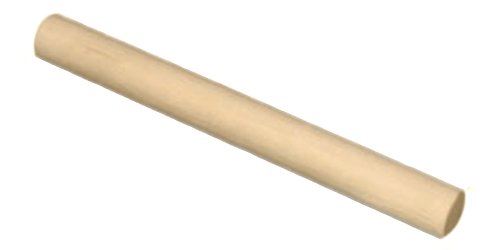
| Spec | Detail |
|---|---|
| Our score | 9.3 / 10 |
| Price | ~$22–$30 |
| Style | Straight dowel, handleless |
| Size | 19 in long × 2 in diameter |
| Material | Solid maple, beeswax finish |
| Made | Vermont, USA |
| Care | Hand wash; dry immediately |
| ASIN | B000IYYG26 |
ATK’s other winner: the JK Adams plain dowel, which they liked for heft on big jobs. The 2-inch diameter keeps your hands close to the dough and the full-length straight surface rolls even sheets edge to edge.
If you only bake one or two pies a year but make pizza weekly, buy this instead of the French pin. It is harder to turn into a perfect circle, but faster for rectangles and large rounds.
Pros: More weight does more of the work; Full 19-in flat surface for big sheets; Simple, durable, inexpensive.
Cons: Less nimble than a tapered pin for small rounds; No thickness guides.
Check Price on AmazonJoseph Joseph Adjustable Rolling Pin with Removable Rings (Blue)
Beech pin with snap-off thickness rings — takes the guesswork out of cookie and fondant thickness.
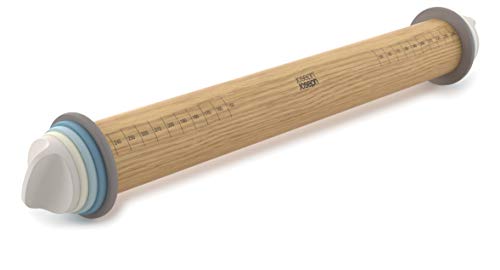
| Spec | Detail |
|---|---|
| Our score | 8.6 / 10 |
| Price | ~$20–$25 |
| Style | Straight pin with removable spacer rings |
| Thickness settings | 1/16, 1/6, 1/4, 3/8 in |
| Size | 13.6 in without rings, 17 in with rings |
| Material | Beech wood; plastic rings |
| Extras | Etched width measurement guide |
| Care | Hand wash; do not submerge |
| ASIN | B012W9BHBW |
The four ring pairs lift the pin off the counter by a set amount, so every cookie on the sheet bakes at the same rate. That is a real advantage for decorated cut-outs, where uneven dough means burned edges and raw centers.
The trade-off is a shorter 13.6-inch working barrel, which limits sheet width, and some owners report the etched logo and markings can imprint soft dough. For pie crust, we still prefer the JK Adams pins.
Pros: Built-in thickness control; Good for fondant and cookies; Affordable.
Cons: Shorter working barrel; Etched markings can imprint very soft dough; Hand wash only.
Check Price on AmazonFrench vs Dowel vs Handled: Which Shape Fits You?
French (tapered): lightest and most maneuverable; best for pie, tart, and round cookie dough. Straight dowel: heavier with the most flat surface; best for pizza, big sheets, and laminated dough. Handled pins: familiar and easy for beginners, but your hands sit farther from the dough and bearings add parts to clean. Adjustable pins: a straight pin with spacer rings for repeatable thickness, ideal for cut-out cookies and fondant.
Frequently Asked Questions
What type of rolling pin is best for pie crust?
French rolling pin vs dowel: which should I buy?
Are handled rolling pins bad?
How do I keep dough from sticking to a wooden rolling pin?
How do I clean and care for a wood rolling pin?
Final Verdict
Buy the JK Adams French Rolling Pin if pie, tarts, and cookies are your main jobs. Choose the JK Adams plain dowel for pizza nights and big batches, and the Joseph Joseph Adjustable pin if even cookie thickness is what keeps going wrong.