Best Paring Knives (2026)
Four verified picks: a forged Mercer that wins on value and performance, the cult-favorite Victorinox for under $15, a Wüsthof Classic heirloom, and a MAC for long-lasting Japanese sharpness.
After a chef’s knife, a paring knife is the blade you will reach for most: peeling apples, hulling strawberries, segmenting citrus, trimming green beans, and mincing a single shallot. The good news is that the best paring knife for most people is not expensive. Independent testers keep landing on knives that cost $10 to $25.
We built this list from published testing by America’s Test Kitchen, Wirecutter, and Serious Eats, and we confirmed each US Amazon listing by product title and ASIN on October 12, 2026. Pair your paring knife with a solid chef’s knife, a knife-friendly cutting board, and a good knife sharpener, and read how to store knives safely so the edge lasts.
More knife coverage lives in our Knives hub and the site-wide Best Picks roundup.
How We Chose These Paring Knives
We looked for a sharp, pointed blade around 3 to 3.5 inches, a handle that stays secure when wet, good control for in-hand peeling, and steel that is easy to keep sharp. We cross-checked results from America’s Test Kitchen, Wirecutter, and Serious Eats, used maker specs for steel and hardness, and locked every ASIN from a live Amazon product title (never invented). Scores are our editorial ratings based on that research, not lab measurements. Prices move, so always check the live listing.
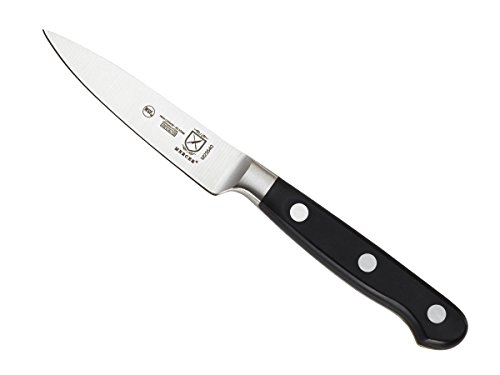
Mercer Culinary Renaissance 3.5-Inch Forged Paring Knife (M23540)
Forged German steel, a narrow pointed blade, and a comfortable Delrin handle for about a quarter of the price of the big names.
| Spec | Detail |
|---|---|
| Our score | 9.4 / 10 |
| Price | ~$25 |
| Blade | 3.5 in, plain edge |
| Steel | High-carbon German steel, 56 ± 1 HRC |
| Edge angle | 15° |
| Construction | Precision forged, half bolster, triple-riveted |
| Handle | Delrin |
| Made | Taiwan |
| Care | Hand wash and dry; not dishwasher safe |
| ASIN | B0034612OK |
America’s Test Kitchen named the Mercer Renaissance its overall winner in its paring knife testing, praising a sharp, fairly narrow blade that peels, hulls, slices, and minces well, plus a handle that suits hands of all sizes.
Mercer lists a 15° edge and 56 ± 1 HRC hardness, so it is a little softer than the Wüsthof and much softer than the MAC. In practice that means it is easy to hone back to sharp and forgiving of the odd bump against a plate. The half bolster also makes it simple to sharpen the full length of the edge.
Pros: Sharp out of the box with a narrow, nimble blade; Forged build and comfortable handle at a budget price; Half bolster makes full-edge sharpening easy.
Cons: Softer steel needs honing more often than Japanese blades; Hand wash only.
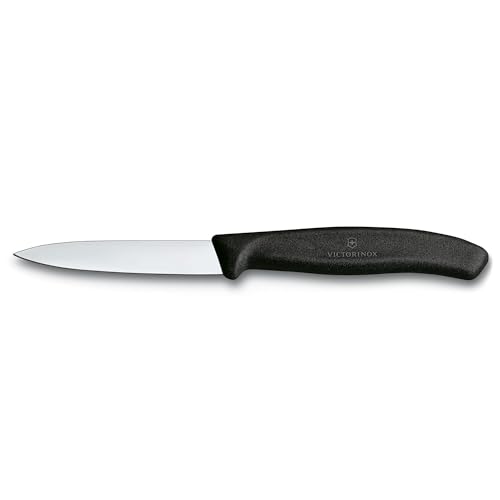
Check Price on AmazonVictorinox Swiss Classic 3.25-Inch Paring Knife (Straight Edge, Spear Point)
The famously cheap, razor-sharp “Little Vicki” — light, grippy, and dishwasher safe.
| Spec | Detail |
|---|---|
| Our score | 9.0 / 10 |
| Price | ~$8–$12 (varies by color) |
| Blade | 3.25 in, plain edge, spear point |
| Construction | Stamped stainless steel |
| Handle | Polypropylene, textured |
| Weight | About 18 g (0.6 oz) |
| Made | Switzerland |
| Care | Dishwasher safe; hand washing recommended |
| Warranty | Lifetime against defects |
| ASIN | B0061SWLKW |
Wirecutter has recommended this knife since 2014, calling it cheap, razor-sharp out of the box, and easy to resharpen. ATK calls it a longtime favorite and its Best Buy, with a relatively sharp, pointy blade and grippy plastic handle, though it judged the Mercer’s blade a bit sharper.
At roughly 18 grams it barely registers in the hand, which is great for in-hand peeling but means it does no work for you on a board. The thin stamped blade can flex on hard squash or root vegetables, so reach for a chef’s knife there. If you mostly slice tomatoes and stone fruit, Victorinox also sells a serrated 3.25-inch version.
Pros: Excellent sharpness for the price; Very light and easy to control in hand; Dishwasher safe and comes in many colors.
Cons: Feels utilitarian and lightweight; Thin blade flexes on hard produce; Edge dulls faster than forged picks.
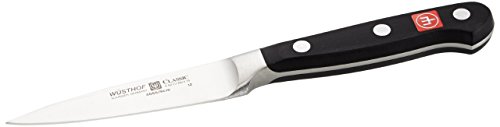
Check Price on AmazonWüsthof Classic 3.5-Inch Paring Knife (4066-7/09)
Full-tang, forged Solingen steel with a full bolster — controlled, precise, and built to outlast you.
| Spec | Detail |
|---|---|
| Our score | 8.8 / 10 |
| Price | ~$90–$95 |
| Blade | 3.5 in, plain edge |
| Steel | High-carbon stainless, 58 HRC |
| Edge | PEtec (precision edge technology) |
| Construction | Forged, full tang, full bolster, triple-riveted |
| Handle | POM synthetic |
| Made | Solingen, Germany |
| Care | Hand wash recommended |
| ASIN | B00009YB1O |
Serious Eats found the Wüsthof paring knife controlled and precise, with a sharp blade that slices without hesitation. ATK also tested the Classic 3.5-inch and liked its sharpness for detailed in-hand work, but marked it down for a short, slick plastic handle.
It is the pick if you want your paring knife to match a Wüsthof Classic chef’s knife, or you simply prefer a heavier, solid feel. Know the trade-offs first: you pay roughly four times the Mercer price for a similar job, and the full bolster makes sharpening the heel of the edge harder over the years.
Pros: Precise, sharp, well-finished edge; Full tang and bolster feel solid; Matches the rest of the Wüsthof Classic line.
Cons: About four times the price of the Mercer; Short, smooth handle can feel slippery when wet; Full bolster complicates sharpening the heel.
Check Price on AmazonMAC Professional 3.25-Inch Paring Knife (PKF-30)
Thin, hard Japanese steel that stays sharp longer, with a Pakkawood handle and bolster.

| Spec | Detail |
|---|---|
| Our score | 9.1 / 10 |
| Price | ~$70 |
| Blade | 3.25 in, 2.0 mm thick, 0.75 in tall |
| Steel | Molybdenum alloy stainless (59–61 HRC per retailers) |
| Construction | Bolstered, Pakkawood (resin-impregnated wood) handle |
| Overall length | 7.5 in |
| Weight | About 2.1 oz |
| Made | Japan |
| Care | Hand wash only; not dishwasher safe |
| ASIN | B000N5DNZG |
Wirecutter chose the MAC Professional paring knife as its upgrade pick. MAC lists a 3.25-inch blade only 2 mm thick, and retailers rate the steel at 59–61 HRC, harder than any other knife here, so it holds a keen edge longer between sharpenings.
The trade-off with hard, thin steel is that it is less tolerant of twisting, prying, or bone, and it should never go in the dishwasher. If you already like our Japanese-style blades or own the MAC MTH-80 chef’s knife, this is the natural match.
Pros: Hardest steel and best edge retention in this guide; Thin blade glides through shallots and fruit; Comfortable wood handle and bolster.
Cons: Not dishwasher safe; Harder steel can chip if abused; Pricier than the Mercer for similar everyday results.
Check Price on AmazonParing Knives Compared
| Knife | Blade | Build | Hardness | Dishwasher | Price |
|---|---|---|---|---|---|
| Mercer Renaissance | 3.5 in | Forged, half bolster | 56 ± 1 HRC | No | ~$25 |
| Victorinox Swiss Classic | 3.25 in | Stamped | Not published | Yes (hand wash recommended) | ~$8–$12 |
| Wüsthof Classic | 3.5 in | Forged, full bolster | 58 HRC | Hand wash recommended | ~$90–$95 |
| MAC Professional PKF-30 | 3.25 in | Bolstered, Pakkawood | 59–61 HRC | No | ~$70 |
Spear Point vs Bird’s Beak vs Serrated
Spear point (straight edge): the all-rounder, and the style of every knife above. It peels, cores, minces, and slices on the board. Bird’s beak (tourné): a short, hooked blade that excels at off-the-board jobs like peeling round fruit, deveining shrimp, and trimming asparagus, but it is awkward on a cutting board. Serrated: grips slick skins on tomatoes, peaches, and citrus, but it tears softer foods and is hard to sharpen at home. Buy a spear point first, then add a specialty blade if you find yourself needing one.
Frequently Asked Questions
What is the best paring knife for most people?
What size paring knife should I buy?
Is an expensive paring knife worth it?
Should I get a serrated or straight-edge paring knife?
Can paring knives go in the dishwasher?
How do I keep a paring knife sharp?
Final Verdict
Buy the Mercer Culinary Renaissance if you want one excellent paring knife at a fair price. Grab the Victorinox Swiss Classic if you want a cheap, sharp workhorse or a spare. Choose the Wüsthof Classic to match a Wüsthof set, or the MAC Professional if you want thin, hard steel that holds its edge longest.