Japanese vs German Knives: Which Is Right for You?
Every home cook who outgrows a gift-set knife hits the same fork in the road: German or Japanese. Fans of each are loud about it, and most comparisons blur the details that actually matter, like how hard the steel is, how thin the edge is, and how much upkeep you're signing up for.
Neither style is objectively better. German knives are built to be tough and forgiving. Japanese knives are built to be thin, hard, and precise. The gap has also narrowed: Wüsthof now sharpens its forged knives to 14° per side, and popular Japanese knives like the MAC MTH-80 and Global G-2 use Western handles. This guide explains the real differences, then recommends three proven knives in each style.
Quick Picks
About $50. Light, grippy, forgiving, and America's Test Kitchen's longtime favorite.
Check Price on Amazon ↗Forged Solingen steel at 58 HRC with a 14° edge. Heavy, durable, and built for decades.
Check Price on Amazon ↗A thin, hard Japanese edge with a Western handle and bolster. Wirecutter's top pick since 2013.
Check Price on Amazon ↗Quick Summary: German vs Japanese
🇩🇪 German Knives
- Softer steel (about 56–58 HRC), so it's tougher and less likely to chip
- Thicker spine and heavier blade
- About 14–20° per side, depending on maker and age
- Often a full bolster that guards your fingers
- Curved belly built for a rocking cut
- Easy upkeep with a honing steel and basic sharpener
- Best for heavy prep, mixed tasks, and beginners
🇯🇵 Japanese Knives
- Harder steel (about 58–61 HRC for mainstream knives, higher on premium ones)
- Thinner spine and lighter blade
- About 10–16° per side, so it slices more cleanly
- Often little or no bolster, so the whole edge is usable
- Flatter profile suited to push and pull cuts
- Holds an edge longer but can chip on hard foods
- Best for precise slicing, vegetables, and fish
The Real Differences Explained
1. Steel Hardness: The Foundation of Everything
Hardness is measured on the Rockwell C scale (HRC). Classic German knives use X50CrMoV15 stainless at about 56–58 HRC; the Wüsthof Classic is 58. Mainstream Japanese chef's knives usually sit around 58–61 HRC (the Shun Classic's VG-MAX core is about 60–61), and premium Japanese steels can run higher.
Harder steel holds a fine edge longer, which is the big Japanese advantage. The cost is toughness. Twist a hard, thin blade through a chicken joint or pry out an avocado pit and the edge can chip. Softer German steel tends to roll or dent instead, and a honing steel pushes it back into line in seconds.
2. Edge Angle: Why Japanese Knives Feel Like Razors
Older and budget German knives were often sharpened to about 20° per side. Wüsthof switched its forged lines to 14° per side, and Victorinox lands around 15–20°. Western-style Japanese knives are typically about 15–16° per side (Shun lists 16°), and thin specialty blades go lower. The thinner edge, combined with a thinner blade behind it, is what makes a Japanese knife glide through onions and tomatoes instead of wedging them apart.
Because German makers have moved to more acute edges, the sharpness gap out of the box is smaller than it used to be. The bigger remaining difference is blade thickness behind the edge and how long the edge lasts.
3. Weight, Balance, and Shape
German knives are heavier. The forged Wüsthof Classic weighs about 8.5 oz, and the weight helps it power through squash and sweet potatoes. A full bolster protects your fingers and moves the balance toward the handle. The curved belly suits a rocking chop.
Japanese knives are lighter and more blade-forward. The MAC MTH-80 is about 6.5 oz and the all-steel Global G-2 is about 5.5 oz. Their flatter profile favors push cuts and slicing strokes, and the lower weight means less fatigue during long prep. Note that the light Victorinox Fibrox (about 6 oz) breaks the German stereotype, since it's stamped rather than forged.
4. Maintenance: What You'll Actually Have to Do
German knives are easy to live with. A few strokes on a honing steel before you cook keeps the edge aligned, and a sharpening two to four times a year is plenty for most home cooks. They also tolerate electric sharpeners well.
Japanese knives need sharpening less often, but they need gentler tools. A grooved steel rod can chip a hard edge, so use a fine ceramic rod or a strop for touch-ups, and sharpen on a whetstone or a sharpener set to about 15°. If you'll never sharpen at all, a Japanese knife will still stay sharp longer than a German one, but it will eventually go dull too.
The Middle Ground: Western-Handled Japanese Knives
Most Japanese chef's knives sold in the US aren't traditional single-bevel blades. They're gyutos, the Japanese take on the Western chef's knife, with a double-bevel edge and often a Western-style riveted or one-piece handle. That makes them the easiest bridge for cooks coming from German knives.
The MAC MTH-80 is the classic example: a hard, thin, dimpled blade with a bolster and a familiar handle. The Global G-2 runs a bit softer at about 56–58 HRC, so it's more chip-resistant than most Japanese knives. If you mostly push-cut vegetables, a santoku is another option (see our Best Santoku Knives (2026) picks), but remember that santoku is a blade shape, not a steel; Wüsthof and Zwilling make German-steel santokus too.
Side-by-Side Comparison
| Feature | German Knives 🇩🇪 | Japanese Knives 🇯🇵 |
|---|---|---|
| Steel hardness (HRC) | About 56–58 Tougher | About 58–61, higher on premium Holds Edge Longer |
| Edge angle (per side) | About 14–20° | About 10–16° Sharper |
| Blade behind the edge | Thicker | Thinner |
| Typical weight (8") | About 6–9 oz More Heft | About 5.5–7 oz Lighter |
| Cutting style | Rocking chop Versatile | Push and pull slicing More Precise |
| Chip resistance | Excellent Winner | Moderate; avoid bones and frozen food |
| Maintenance | Honing steel plus occasional sharpening Easier | Ceramic rod or strop; whetstone or 15° sharpener |
| Best for | Heavy prep, joints, mixed daily use | Vegetables, fish, boneless proteins, fine slicing |
| Best for beginners? | Yes Winner | Yes, if you pick a Western-handled gyuto and treat it gently |
| Price range (8" chef's) | About $40–$200+ | About $100–$400+ |
| Dishwasher safe? | Hand wash both. Victorinox allows the dishwasher, but it still dulls the edge. | |
German Knives: Strengths and Weaknesses
German knives, from brands like Wüsthof, Zwilling, and Mercer (plus Swiss-made Victorinox, which follows the same Western style), are the workhorses of most home and restaurant kitchens. They put durability and versatility ahead of raw sharpness.
🇩🇪 Why Cooks Love German Knives
- Tough. Softer steel flexes or rolls instead of chipping, so joints, cartilage, and hard squash are fair game.
- Forgiving. Imperfect technique and the occasional rough board won't wreck the edge.
- Easy to maintain. A honing steel restores the edge between sharpenings, and electric sharpeners work fine.
- Versatile. One knife handles onions, chicken, herbs, and a whole pumpkin.
- Every budget. From the roughly $50 Victorinox to forged Wüsthofs around $150 and up.
🇩🇪 German Knife Trade-Offs
- Edges dull faster. Softer steel needs honing more often to stay crisp.
- Heavier. Forged models weigh around 8–9 oz, which some cooks find tiring over long prep.
- Thicker blades wedge. Dense vegetables like carrots can crack instead of slice cleanly.
- Full bolsters complicate sharpening. On knives like the Wüsthof Classic, the bolster stops the heel from reaching a stone, so it may need grinding down after years of sharpening.
Japanese Knives: Strengths and Weaknesses
Japanese knives from MAC, Shun, Global, Miyabi, Tojiro, and many smaller makers are built around a different ideal: a thin, hard blade that glides through food instead of pushing it apart.
🇯🇵 Why Cooks Love Japanese Knives
- Very sharp out of the box. The thin blade and acute edge make clean, effortless cuts.
- Longer edge life. Harder steel resists rolling, so you sharpen less often.
- Light and precise. Less weight and a forward balance make fine work and long prep easier.
- Gentler on delicate food. Tomatoes, herbs, and fish cut cleanly without bruising.
- Craftsmanship. Damascus cladding, like the Shun Classic's, and fine finishes appeal if looks matter to you.
🇯🇵 Japanese Knife Trade-Offs
- Chips on hard foods. Bones, frozen food, and twisting cuts are off-limits.
- Pickier upkeep. Skip grooved steels and coarse pull-throughs; use a ceramic rod, strop, or whetstone.
- Higher entry price. Good Japanese chef's knives start around $100. Cheap "Japanese-style" knives are often worse than a $50 Victorinox.
- Less brute force. The light blade won't power through a winter squash the way a forged German knife does.
Our Recommended Picks in Each Style
These six knives have long track records in published testing and are easy to buy in the US. For a ranked list with scores and full spec tables, see our best chef's knives for home cooks.
| Knife | Style | Hardness | Edge / side | Weight | Approx. price |
|---|---|---|---|---|---|
| Victorinox Fibrox Pro | Stamped Swiss (German-style) | ~56 HRC | ~15–20° | ~6 oz | ~$45–$55 |
| Wüsthof Classic | Forged German, full bolster | 58 HRC | 14° | 8.5 oz | ~$150–$170 |
| Wüsthof Classic Ikon | Forged German, half bolster | 58 HRC | 14° | Similar to Classic | ~$155–$200 |
| MAC MTH-80 | Japanese hybrid, bolstered | ~59–61 HRC | ~15° | 6.5 oz | ~$160–$195 |
| Global G-2 | One-piece Japanese | ~56–58 HRC | ~15° | ~5.5 oz | ~$105–$120 |
| Shun Classic DM0706 | Japanese Damascus | ~60–61 HRC | 16° | 6.7 oz | ~$140–$190 |
Top German Knives
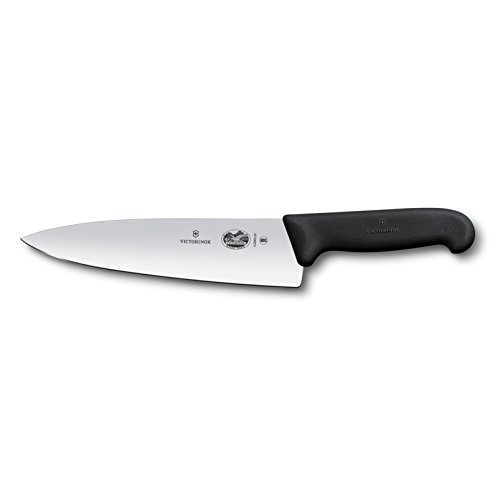
Victorinox Fibrox Pro 8"
America's Test Kitchen's favorite budget chef's knife for decades. It's stamped, light at about 6 oz, NSF certified, and the textured handle stays put when wet. Not pretty, but very hard to beat for the money. Read our full Fibrox review.
 Check Price on Amazon ↗
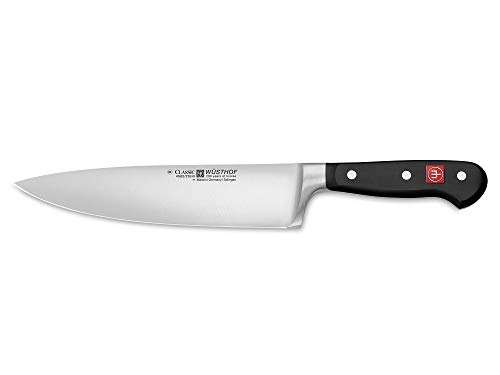
Wüsthof Classic 8"
The benchmark forged German chef's knife: X50CrMoV15 steel at 58 HRC, a 14° PEtec edge, a full bolster, and a triple-riveted handle. At about 8.5 oz it has real heft for dense produce. See how it stacks up in Wüsthof vs Victorinox.
 Check Price on Amazon ↗
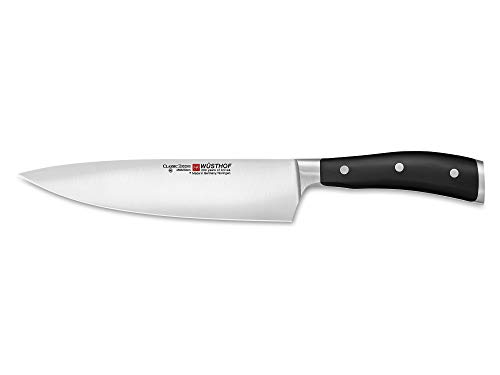
Wüsthof Classic Ikon 8"
The same 58 HRC steel and 14° edge as the Classic, with Wüsthof's double-bolster design: a half bolster at the heel that lets you sharpen the full length of the blade, plus a rear bolster and a more contoured handle for balance. Worth the premium if you sharpen at home and plan to keep the knife for decades.
 Check Price on Amazon ↗
Top Japanese Knives
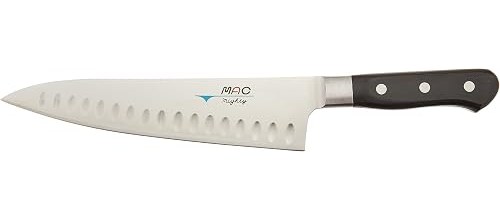
MAC Professional MTH-80 8"
Wirecutter's top chef's knife pick since 2013. The 2.5 mm blade is hard (about 59–61 HRC) and thin, the dimples reduce sticking, and the bolster and Western handle feel natural to German-knife users. At 6.5 oz it's light without feeling flimsy. Make sure you get the MTH-80, not the cheaper Chef series TH-80.
 Check Price on Amazon ↗
Global G-2 8"
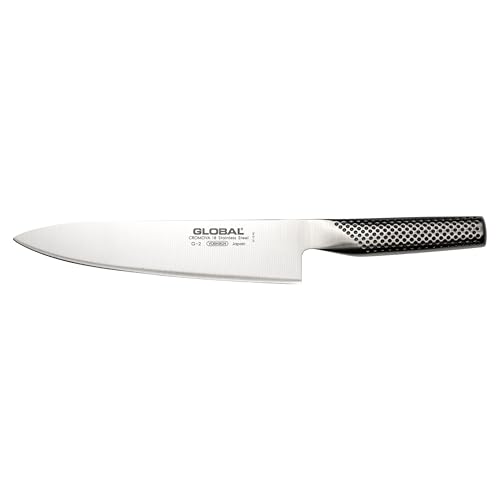
Iconic one-piece stainless design with a dimpled steel handle. CROMOVA 18 steel at about 56–58 HRC is softer than most Japanese knives, which makes it more forgiving, and at about 5.5 oz it's the lightest knife here. The slim metal handle suits smaller hands best.
 Check Price on Amazon ↗
Shun Classic 8" (DM0706)
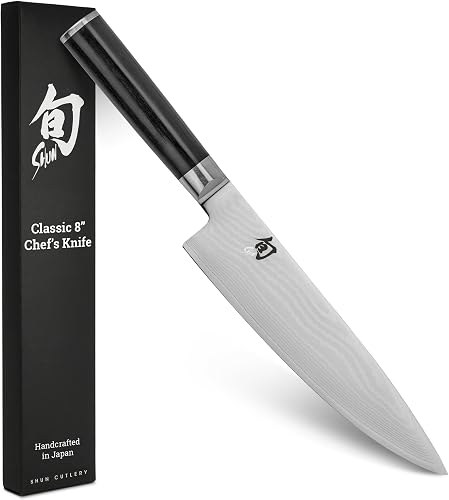
A VG-MAX core (about 60–61 HRC) clad in 68 layers of Damascus stainless, sharpened to 16° per side, with a D-shaped Pakkawood handle. Very sharp and long-lasting, and Shun offers free sharpening. It's the most chip-prone pick here, so keep it away from bones.
 Check Price on Amazon ↗
Sharpening and Care by Style
A sharp $50 knife beats a dull $190 one. These two tools cover both styles; our knife sharpener guide adds whetstones and manual options.
Wüsthof 10-Inch Honing Steel
A few light strokes before cooking realign a softer German edge between sharpenings. Skip it for very hard Japanese knives; use a fine ceramic rod or strop instead.
 Check Price on Amazon ↗
Chef'sChoice 15XV Electric Sharpener
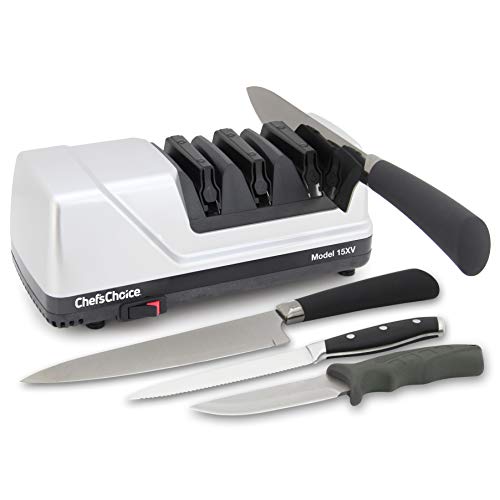
A 3-stage diamond sharpener that sets a 15° edge, which suits Japanese knives and modern German ones. It removes metal quickly, so use the fine stage for routine touch-ups.
 Check Price on Amazon ↗
For either style: cut on wood or plastic (see our cutting board picks), hand wash and dry right away, and store knives on a magnetic strip, in a block, or with edge guards. Our guide to storing knives safely covers the options.
Which Style Is Right for You?
🇩🇪 Choose German If You…
- Are buying your first serious kitchen knife
- Break down whole chickens or cut through joints
- Like a heavier knife and a rocking chop
- Want simple upkeep with a honing steel
- Share knives with a household that isn't careful with them
- Want to spend under $100 (the Victorinox is the pick)
🇯🇵 Choose Japanese If You…
- Do lots of vegetable prep, fish, or fine slicing
- Prefer a light knife and push or pull cuts
- Will hand wash and avoid bones and frozen food
- Are open to a whetstone or a 15° sharpener
- Already own a German knife and want a precise second blade
- Can spend about $100–$200 for a knife you'll keep for years
Frequently Asked Questions
Are Japanese knives better than German knives?
Which is easier to maintain, Japanese or German?
What is the best beginner chef's knife, Japanese or German?
Can I use a Japanese knife on bones?
What angle should I sharpen German and Japanese knives?
Is a santoku a Japanese or German knife?
Can I use a pull-through or electric sharpener on a Japanese knife?
What is a good first Japanese knife for someone used to German knives?
Still Deciding?
See all six knives ranked with scores and full specs in our chef's knife guide.